Showing posts with label Editorials. Show all posts

Thursday, January 5, 2012

I Blogged Anyway….: The Second Anniversary Post

Well, I would be out in the Second Anniversary of this blog. PRELIMS. 


But I would be leaving you with this thought:

Two years have now passed since I started blogging. I knew that it is not my flagship media online, since there would be other things that I may be involved in the future.

And I was right. I was appointed Admin at 100% KATOLIKONG PINOY! last August, and since then, this blog took a back seat when it comes to airing my sentiments. But this blog is very important since this is where I air my personal sentiments on what is going on with the Catholic Church, as well as what I observe in Philippine Media and Politics.
 
I blogged anyway.

There are things that really transpire in this little sandbox of scribbles and thoughts. May mga pagkakataon na feeling ko, nilalangaw 'tong blog na 'to kaya mga reposts na lang ang nagagawa ko. But there are really a number of original stuff from Yours Truly that really needs to be published.

I blogged anyway.

There are really times that I am frustrated to use my fingers and pick up a pen and paper to make drafts of my written works; or put them into a keyboard and just type with no or little revisions. It turns out that they're beautiful the way they are.

I blogged anyway.

I have beaten my previous number of posts last 2010 by more than a half. And just because of this, I would try to beat that record again this year; because no matter how busy I would be this year, if there is something worth blogging…

I blog it anyway.

Tuesday, December 27, 2011

A Personal Reflection on Saint John the Beloved

My name is Ian, and as I searched for what my name means, I discovered that it was a Scottish variant of the name John, and parallel to the Russian "Ivan", the Irish "Sean", and the Greek "Ioannis". That means, if my name (Ian Joseph) is Latinized, it would be Ioannes Iosephus (correct me if I'm wrong); and in Spanish, strictly speaking, Juan Jose.

Anyway, aside from that, I could really relate to the name, since it is actually Biblical, though the foreign variation. It actually means "God is gracious" (and its cool because we Catholics believe that it is grace that moves us to something). I said that it is Biblical because there were two characters with that name and are related to Christ: one was His Forerunner and relative (John the Baptist); the other His Apostle and an evangelist (John the Beloved). I'm more close to that of the latter.

Saint John was an ordinary fisherman's boy prior to the call of Jesus, where he, alongside his brother James and their neighbors Peter and Andrew, were called to become "fishers of men". John was actually reckoned as the youngest of the Twelve, basically in his teens or early twenties. It was him who sat beside Jesus at the Last Supper, an event where the Apostles were ordained priests. It was him who, in behalf of the Church, stood at the foot of the cross and in his care the Lord entrusted His Mother--to become our Mother too. It was him who ran ahead of Peter yet entered after him at the tomb where Jesus lied as a corpse, to discover that it was empty and that He is risen. It was him who recognized the Lord when seven of the Apostles gone fishing. He is sometimes called "the Theologian" for his outstanding writings--the Three Epistles, the Book of Revelation, and the Gospel attributed to him in which it starts as "In the beginning was the Word, and the Word was with God, and the Word was God.... And the Word was made flesh and dwelt among us." (1:1;14) These writings in the Scriptures are reserved for Christmas and Easter, especially the Gospel, which was the undoing of the sinful acts in the Book of Genesis.

I ponder on the fact that he was the youngest of Christ's inner circle of followers--the first bishops. For my part, I happen to be the youngest in organizations I'm affiliated to outside the four walls of UST: the youngest admin of 100% KATOLIKONG PINOY!, one of the youngest members of Filipinos for Life, one of the youngest aspiring apologists, and so on. In the spirituality of Saint John's youthful status in the Twelve, I see myself as a manifestation that his namesakes would be young, yet inspired by Divine Grace to be what he wants to be for God's glory.

Wednesday, October 26, 2011

The Battle for Existence Continues: the Rosary Month Editorial

(originally made as episode for TSEKPoint, the video commentary program of 100% KATOLIKONG PINOY! now made as a blog version)

This October, we celebrate the Month of the Most Holy Rosary, and there’s no other celebration that could parallel the way the Dominicans honor the Blessed Virgin Mary. Every second week of October, the Order of Preachers, as well as the throngs of people who have a very special attachment to Mary (besides, we were called as the "a people who loved Mary"--"pueblo amante de Maria") because it is the Blessed Mother who interceded to the Child in her arms to preserve the Pearl of the Orient from Calvinist desacration. 

1645 was the year. The Philippines was in total chaos. Revolts were sporadic in the Islands; two earthquakes reduced Manila to ruins; and its Archbishop-elect, Fernando Montero de Espinosa, died before he even took possession of his cathedral. And to make the situation worse, the Dutch are prowling the Philippine shores, desperate to capture poorly-armed Spanish galleons, kick the Spanish regime out of the Philippines, and spread the Protestantism of Calvin. In short, with all these ominous events, the Dutch were resolved that this weak state of the Spanish government in the Philippines is enough to decapitate its rule and incorporate the islands with Formosa (now Taiwan) and Indonesia, both of which were Dutch colonies. It was do or die. If the Spaniards and Filipinos lose, the Philippines will cease to exist.

The Dutch had more or less 15 battleships, divided into three squadrons. The only defense the Spanish-Filipino forces had were two (and later three) galleons, a galley, and a few brigantines (all of them refitted for war). Aside from these makeshift warships, The crew of the Encarnacion (the flagship), the Rosario (the admiral ship), as well as the other warships had weapons and torches on one hand, and rosaries on the other. This only shows that their greatest arsenals were prayers and their devotion to Our Lady of the Most Holy Rosary. 

The first battle was fought on March 15 the next year with the two Spanish-Filipino galleons facing five Dutch battleships—with odds in favor of the latter—off the coast of Corregidor. But their resilience and prayers made the Spanish-Filipino crew draw first blood with minimal damage and zero casualties.

The Encarnacion and the Rosario were then dispatched as escorts to the incoming galleon San Luis. They were then blockaded by seven Dutch warships at Ticao Island for about a month, and was lifted afterwards to sail for Manila. The Spanish galleons, then, chased them to an encounter near Marinduque on the 29th of July. The Dutch waited till nightfall for their fire vessels to be at maximum effectiveness. The Dutch ships encircled the Encarnacion, desparate to capture or destroy the Spanish flagship. They were then fired upon by the Rosario from behind, doing much damage to the enemy squadron. The fire ships then closed in on the two-ship Spanish fleet, hoping to set them on fire, but to no avail. They were heavily bombarded and capsized. The battle lasted till dawn the next day, resulting to a Dutch rout. Again, another victory for the Spanish-Filipino forces with two injuries, but with no deaths, as General Lorenzo de Orella y Ugalde prayed through the intercession of the Virgin before the battle. This was supposed to be the bloodiest among the five battles. 

Two days later, on July 31, 1646, another battle ensued off the coast of Mindoro, this time, with the Spaniards and Filipinos on the offensive. Still in high morale after the previous fight, they cornered the Dutch ships for battle, surprised on how powerful were the Dutch cannons compared to theirs. Resilient and undismayed, they fired upon the Dutch ships, echoing the famous battlecry: “¡Viva la Virgen!” to the sound of their cannons. After four hours one Dutch vessel sank and the rest retreated. Again, no casualties were made on the side of the Spanish-Filipino crew.

After this, General Orella retired as commander of the fleet, turning it over to Captain Sebastian Lopez, thus making him captain of the Encarnacion, while Agustin de Cepeda replaced him as captain of the Rosario. The crew fulfilled its promise before the battle that if they win, they will march barefoot at the Santo Domingo Church in Intramuros. The intermission was important for the Spanish-Filipino fleet to reorganize its crew, do repairs to the ships, and to replenish their supplies. However, they became complacent, believing the Dutch will never again set sail over the Philippine waters. The galleon San Diego was en route to Acapulco when it was harassed by three Dutch ships near Fortune Island. Luckily the poorly-armed ship escaped the trap without an escort and went back to Manila. 

The San Diego was hastily remodeled as a battleship and joined the Encarnacion and the Rosario in the campaign. On Sept. 16, 1646, the now three-ship-and-one-galley-strong Spanish-Filipino fleet met the three-ship Dutch squadron at the port of Calavite in Mindoro. At the height of the battle, the Rosario drifted in for the kill—one ship against three. Admiral Cepeda prepared his crew for broadside fire, and the Dutch fled in the crew’s tenacity.

General Sebastian Lopez ordered the fleet to return to Mariveles to await orders from the Governor-General and to do repairs. On October 4, the San Diego was moored in the port, with the Encarnacion guarding it from a distance. The Rosario was again drifted away from the fleet, this time the Dutch, with three ships, have the flagship, the Encarnacion, as their target. General Sebastian ordered to move the ship, and the final battle for existence was about to begin.

With cunning movement and furious bombardment, the Encarnacion singlehandedly inflicted heavy damages to the enemy ships, causing them to flee. When the wind died down, the galley then attacked the Dutch ships, particularly the Dutch flagship. When it was about to be sunk, the wind blew again, allowing the Dutch to escape despite the pursuit of the Encarnacion and the galley. That final battle tolled four deaths aboard the Encarnacion. 

General Sebastian Lopez again fulfilled their vow of marching barefoot to the shrine of the Virgin of the Rosary. From that time on, all efforts of the Dutch to capture the Philippines were already in vain.

Celebrations were made in Manila, for their death sentence was lifted. An ecclesiastical committee of the vacant See of Manila then convened to investigate if the said series of battles were to be declared as miracles. And true enough, they were for the following reasons:

First, despite the bitter fighting, only fifteen people from the Spanish-Filipino crew lost their lives;

Second, the Encarnacion and the Rosario were old galleons supposed to be incapable of a long-term campaign, yet they won with unexpected results; and

Finally, the crew prayed the Rosary, and implored the intercession of Our Lady of the Most Holy Rosary, which was also the agent of the victory of the Holy League under John of Austria at the Battle of Lepanto decades ago. 

This only shows that for those who pray, prayer is powerful; and if coupled with human efforts, there will be great results.

This was also a sign of determination that the Spaniards will never surrender the faith they practice and preach to the natives. This was a battle for survival—a battle for the existence of the Philippines itself, which Nick Joaquin said:

"Imagine the Philippines as part of Indonesia! That seems incredible today - but it's a might-have-been of our history. There was a time in the 17th century when our fate hung in the balance. Had events gone the other way, THERE MIGHT HAVE NO PHILIPPINES AT ALL.” 

The battles were part of the Eighty Years’ War between Spain and the Dutch and her allies. Their battlefield was extended to the colonies, threatening to conquer and destroy Spanish culture from the Filipinos. If not for this gallant, almost predictable defense, we would be speaking Dutch instead of English, and we will not have this kind of procession. More importantly, if we just sat down and let the Dutch take over the Philippines, we would not have become the predominant Catholic country in Asia, from which we owe our culture to, for we are already indoctrinated by the heresy of Calvin. 

A coincidental fact: Spain and the Netherlands faced each other again, this time; in the FIFA World Cup Finals in Johannesburg last 2010. Just as almost 400 years ago, the Spanish emerged victorious against the Dutch and won that year’s championship, their first in football. 


Now, another battle is ongoing; though a truce is formally implemented from now until January next year. It is not about territories or indoctrination of heresies, but of ideologies of what life is all about. 

It was on October 7, 2010 that Filipinos for Life, and in the partnership of 100% Katolikong Pinoy, launched the Facebook page called “I Oppose the RH Bill”, in response to the all-hell-broke-loose web war made by neo-atheists, freethinkers, and most of the people who associate themselves to the pro-RH crowd, specifically those who question the alleged involvement of the Catholic Church in politics, as Carlos Celdran assumes. We at 100% Katolikong Pinoy plugged the page instantly, since we also experience anti-Church bigotry through statements and trolling, and sometimes, divides the line between loyal Catholics and dissident, nominal Catholics, not to mention anti-Catholic statements about the “doctrine” of contraception. 

Ever since the establishment of the lines between those who claimed that the RH Bill was for women’s rights and for those who proclaim that life is sacred and should be left alone, TV debates have already aired, thousands of arguments have already been raised, both houses of Congress take this bill into consideration than other more important legal documents pending for ratification, most especially now that Senator Lito Lapid exposed that the RH Bill’s budget is about 13.7 million Pesos. Imagine that.

This is another battle for existence. But this time, it is not fought with ships or cannons, but with ideologies and arguments. And this time, what hangs in the balance is the destiny of our moral and socio-economical status, as well as the lives we are living and the lives yet to exist. 

The belligerents are the pro-life groups, dauntlessly spearheaded by the Catholic Church, and the groups who favor contraception, abortion, divorce, same-sex marriage, and the abuse (or to put it in their point, the exercise) of the freedoms of speech, choice, and expression. Instantly, groups of individuals, as well as large institutions and organizations take their sides, whether in overt or in covert manner, contributing to their consecutive camps.

As far as everyone can see, there seems to be a deadlock between them, if not an uphill advantage of one of them. A deadlock since the pro-RH are supported by celebrities people see, hear, and talk about in the media; while the pro-life camp only have a handful, mostly, the least talked-about (of course Manny Pacquiao and Sen. Tito Sotto are exceptions). But when it comes to things like proof, as well as exposure in charity works specially in times the Filipinos are on their knees, it is the Catholic Church and the pro-life NGO’s (if ever there are; but of course there are) who is the first to respond to the needs of the victims of calamities and the ire of nature in general; the pro-RH camp falls silent in these situations either because they don’t have the capacity to do so, or because they think it is not part of the argument, yet paradoxically, they point out the alleged wealth of the Catholic Church—that they have enough resources to purchase vehicles.

If that is the case, at least the Church uses it for the common good, of course comparing to some anti-Church organizations that have the luxury to produce advertisements about their cause and create full-scale campaigns out of their own pockets. 

In 1646, we have defended Manila, dubbed as the Rome by the Pasig by Nick Joaquin, from the Calvinist Dutch. Now, we face much more influential enemies: DEATH and its cohorts. Of course there are people outside the Church who support us in our campaign against this threat to the country's survival; the only problem is that some of them independently fight these monstrosities for their own benefits. We hope that these allies of ours may soon realize that we are fighting the same enemies and that they may agree to join forces to achieve a more decisive victory. 

To summarize, we are still facing a battle, in one way or another. But the battle we insist in this episode is not just a personal one, but it is a battle for reputation and respect. The Philippines is considered to be the last impregnable fortress of true Catholicism outside the Vatican. Malta has already succumbed to the legalization of divorce, and many predominantly Catholic countries, even Spain and Italy, have already been secularized as a society. It is up to us, the gallant men and women striving for sanctification, to remain loyal to the teachings of Christ through His Vicar and through His Church and to justify our reputation as the Rome of Asia. For this, we say, the battle for our existence continues. 


Saturday, August 6, 2011

Grassroots: Common Ground

Sa isang pag-uusap isang gabi sa FX, napasarap ang kwentuhan namin ng isang kasama sa CA (Communication Arts) na isang Evangelical ("Born Again" Christian) habang kami'y papauwi mula UST. Maraming bagay ang aming napag-usapan, lalo na ang aming pag-aaral; at sa sobrang daldal ko, nasingit ko ang ang efecto ng naging Sexual Revolution sa Kanluran.

Laking gulat ko na napuna niya na may dalang problema ang pagpasa ng Reproductive Health Bill sa moral at socio-economical na aspeto ng ating lipunan. Hindi siya papayag na magalaw siya ng kanyang boyfriend (assuming na meron nga siya) unless maikasal sila. Nasagot ko naman na bilang lalaki, kailangan kong maging responsableng katipan (again, assuming na may girlfriend ako), respetuhin ang kanyang desisyon na hindi makikipagtalik hangga't hindi kasal, at kailangan kong kontrolin ang mga pagnanasa at pang-uudyok ng katawan (desires of the flesh, kumbaga).

Bilang mga Kristyano, napagsang-ayunan namin ang ilang nakasaad sa iisang basehan ng aming pananampalataya mula sa utos ng Panginoon sa paglilikha sa tao (Gen. 1:28), hanggang sa maaaring maging efekto ng contracepsion (ang kasalanan ng Sodom at Gomorrah), maging ang utos ng Diyos na "huwag kang papatay" kahit na hindi namin na-quote ito; kahit nga ang isyu tungkol sa controversiya na kinasangkutan ng PCSO ay nilagyan ng aral na "huwag ipaalam sa kaliwang kamay ang ginagawa ng kanan" (okay, hindi ko na alam kung anong verse yun...).

Sa huli, na-realize naming dalawa na kahit ako'y Katoliko at siya'y isang Evangelical, pagdating sa isyu ng pagpapahalaga sa buhay, may common ground kami--ang buhay ng tao, gaano man kaliit, ay may halaga; siguro nga, dapat no questions asked na 'yun.

Sunday, July 17, 2011

Exploiting the Moment

Radyo Veritas went off air for five days last week due to technical upgrading...

...and in its absence, all hell broke loose.

It seems that the dissident anti-Catholics took it as an opportunity to discredit the Church all the more. But five days were not enough to create a significant change in the rationality of Filipinos; and in those five days, a miracle even happened--the Philippine Charity Sweepstakes Office (PCSO) is now on the defensive mood after the seven bishops were resolved to return to PCSO the SUV's which they allegedly purchased in the course of the Senate hearing. Besides, it was not their loss since they promised a vow of poverty in their ordination to the priesthood.

Furthermore, the revelation of this issue made Carlos Celdran, Elizabeth Angsioco, and their allies and minions furiously rage together and imagine vain things such as "SaPARI at MitsuBISHOP", and other insulting statements. But the sweet revenge (backfire could be a better term) of this issue is that by this radio silence, all the more DZRV's fellow media professionals--whether in TV, Radio, Print, or in Multimedia--have shown their true colors: On one side, the personal bias of some of them prevailed; on the other, the objectivity of balancing views--and sometimes favoring the underdog of this issue, which is the Catholic Church and its ardent adherers.

In this end, Radyo Veritas is back on air--stronger and more widespread. But there is always an effect in communication, even in radio silence; since radio can be an effective catalyst for change and can sway listeners to take action.

Thursday, June 9, 2011

A Leningrad in the Making: The Independence Day Editorial


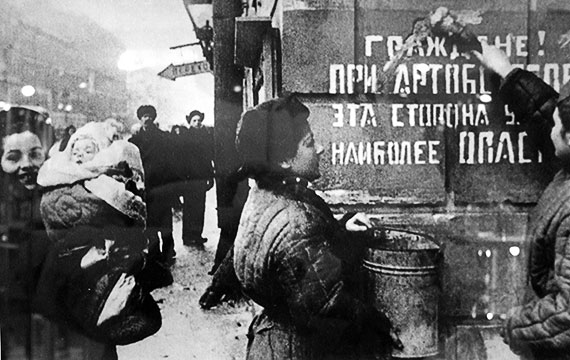
For almost 900 days--from Sept. 8, 1941 to Jan. 27, 1944--the city of Leningrad (known today as St. Petersburg) was blockaded by the Germans and Finns under the command of Field Marshal Wilhelm von Leeb, as part of Operation Barbarossa. The city is so important to Hitler for it was once the capital of Russia before it was moved to Moscow. Furthermore, the city also houses the Baltic Fleet, a heavy tank factory, and some of its most important treasures; and to top it all off, it was the spiritual capital of the Soviet Union, being the cradle of the Russian Revolution. The Third Reich also prioritized this city bearing the name of Vladimir Lenin, the great leader of the Soviets, along with Moscow (the capital) and Stalingrad (the city named after Joseph Stalin, its most influential leader; also functioned as its industrial center; now named Volgagrad).

In this span of time, the defenders and the citizens of Leningrad experienced an ordeal not yet repeated in recent history: about four million of its citizens and defenders were killed, wounded, captured, or got sick after the siege was lifted; food became scarce and its quality degraded; bombardments and barrages became common; sickness and hunger reduced the population; their physical and mental health also deteriorated. In short, Leningrad was the most destructive siege of the war and in history in terms of casualties and economical downfall, with Stalingrad still being the bloodiest battle and turning point of the Great Patriotic War.

But what kept the city alive is the courage to live for their city, even if it means neglecting one's self. The children of Leningrad was committed to fight for their mother-city to the last man. They have held off the besieger more than what they could imagine. Death never conquered Leningrad; instead, Leningrad defeated death.

Though the ferocity and peril of the Second World War has long gone, there seems to be an ideological Leningrad in the Philippines, with the forces of death looming its shores.

For years, the Philippines was left untouched by a legal upcoming dedicated on contraception, population control, and reproductive rights...


...until recently.

Carlos Celdran, the infamous tourist guide who unethically desecrated the Holy Mass at the Manila Cathedral almost a year ago, emphasized on national television that the Church, and by that he means the Catholic Church, is involving itself in politics, but in reality, they are just doing their role as society's Mater et Magistra--Mother and Teacher. Besides, it is possible that he perceives mothers as meddlers to their children while ironically protecting their health from complications and, ultimately, childbirth ailments when in doublespeak. Furthermore, he also proclaimed that they are doing this struggle for 16 years.


These are also the sentiments of Celdran's allies, who happened to be supporters of House Bill 4244, commonly known as the Reproductive Health Bill. Most of them also emphasize that the passage of this bill does not mean that it will lead into abortion; yet in study and experience, passing an act on contraception will eventually lead to an act legalizing abortions, divorce, same-sex marriage, and even prostitution at the worst. What's worse about this is that though there are some who admitted that they push for it sooner or later, there are others who are still insisting that through education, abortion will not happen, though they wanted it at the back of their minds. In short: buking na nga, nagtatago pa.


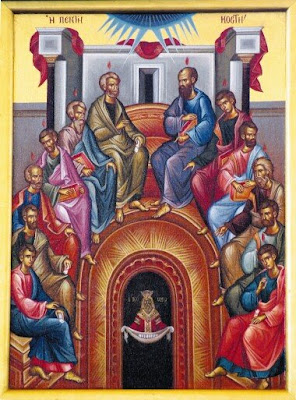
This editorial is timed to the celebration of the Month of the Most Sacred Heart of Jesus and the Immaculate Heart of Mary, and the Month of Matrimony; and specifically, Independence Day, and the Solemnity of  Pentecost last Sunday because the bill on contraception (RH Bill), and the recent looming of a Divorce Bill (which could be compared to Finland in the Siege of Leningrad) are threats to Filipino living as we know it. All laws and proposed laws shape societies, but these bills are doing so all for the wrong reasons. In every angle, the RH and Divorce Bills clearly threaten the Filipino family, our economy, our workforce, even the way we see morality and freedom.

But these groups are but accessories to the real enemies of life and development. Basically, the contraceptive mentality is a foreign concept--an import, to simplify. In short, if these bills will be passed, God forbid, we are opening our doors to aliens and our society will be like the Spanish era--enslaved by foreign minds while retaining our Filipino identity, which is a contradiction to what true nationality is. These bills are given as anti-life, atheistically made, and specifically anti-Catholic; but since we should relate it to our June 12 celebration, we should also emphasize that these legal courses are anti-patriotic; anti-nationalistic; anti-Filipino.


The person responsible for all of this is Margaret Sanger, the founder of the American Birth Control League, the predecessor of Planned Parenthood. Aside from pushing for the legalization of abortion, she also proposes the legalization of birth control methods and promotes negative eugenics, which Adolf Hitler applied during the Third Reich, not just to the Jews, but virtually to everyone who opposes Germany. Now we see the connection of the Siege of Leningrad and to what is called as the "Siege of Filipino Life".

Now let us Filipinize the experience of "The 900 Days". Assuming that the contraceptive mentality and its proponents are struggling for sixteen years, they have long lobbied at the first line of defense. By 2010, they have broke out of the "Luga Line" through the Manila Cathedral incident, and started to isolate the Philippines from the rest of the pro-life world in terms of the contraceptive trend with the compromise of Malta to divorce. Just as Hitler delayed the total destruction of Leningrad in order to kill the populace by hunger, so does the condom-brained people try to make delaying tactics like pushing for a "Divorce Bill" as a red herring to contraception. But it turns out that the Russians have struggled all the more; by creating a "Road of Life" through the frozen Lake Ladoga, the Leningraders were somehow supplied by its basic needs--food, clothing, and fuel. Day in and day out, Pro-lifers based on religion keep on praying, believing in the power of prayer; and those based on secular arguments and facts, keep on researching and studying as much data as they could supply the frontliners.

But still, deaths in Leningrad were of cataclysmic proportions every day of the siege. If "the pill" will be legalized, this may lead to death counts far greater than that of the Japanese Invasion, the Martial Law era, the Pinatubo eruption, and the death tolls of natural disasters combined. Basically, the contraceptive mentality is a death sentence that will bring chaos to society if no one is dedicated to combat it off and force it to our shores once and for all.

After almost 900 days of blockade and misery, Leningrad's siege was lifted. Russia, the very inspiration of this spirit of hope called the Siege of Leningrad, through the Russian Orthodox Church and the Russian government, are taking steps in making abortion illegal and the prohibition of contraceptive use without a physician's prescription. We Filipinos are hoping that this siege brought about by the Culture of Death will be lifted by the Gospel of Life; and that we may destroy the Hitler that is threatening the family.

For now, the Philippines must survive this Leningrad in the making.

Now is the time to play "The Sacred War" in medley with "Bayan Ko".

Wednesday, February 23, 2011

The Saga of the Right to Life Against the Culture of Death

Maybe only a handful knew about the March for Life that happened Valentine's Eve, due to the absence of the major media networks in the country; in fact, the only prominent one present was Radyo Veritas, which is the sole Catholic radio station in the Metropolis. In my personal opinion, this is a problem to the prominent profession which we seek, and because of this ignorance, I was disappointed to the very institutions I look up to. 


But all that happened there is just the tip of the iceberg. Because when you dive down deeper, you would realize that there is a continuing saga of life versus death. 

Yes, reader. I'm talking about the most talked-about moral issue to date: the Reproductive Health Bill; and I would give my best common-sense comments on this. 

It started in the last days of the Arroyo administration, but was aggravated at the beginning of Benigno Aquino III's presidency when Albay Representative Edcel Lagman filed House Bill 96 in the Lower House of Congress. With its responsibility as Mater et Magistra, obviously the Catholic Church is the first to react and challenge the said legal action. Their conflict even got worse when Carlos Celdran got into the picture and rubbed to the Bishops' faces that the Church should not meddle in political affairs while raising high the placard which wrote "DAMASO"; but the Bishops didn't interfere in politics, they just reacted as it is natural for all men to react in a peculiar issue. It is the Church who spearheaded the campaign against the RH Bill, but it does not mean that they were the only ones fighting. There were also pockets of resistance that came from several pastors, imams, and even secular groups. Their support was physically shown in the March for Life and virtually shown through social networking. And everything between it is history. 

Now, I name the game. It cannot be morality because it is more religious. It cannot be the freedom of choice because it's vague. It cannot also be Church vs. State because being a Theist cannot be separated from being a Filipino. Maybe the name of the game is social responsibility. 

Why such? 

Everyone, I presume, is familiar with the Basic Human Rights: in this case, the right to life. Maybe the Bill could promote life, but what makes it wrong is simple: the intention is good yet some provisions are shown promoting artificial family planning (e.g. contraceptives), which is something not yet 100% proven effective. In short, the intentions may be good, but the means are doubtful: thus, a doubtful legal action that must be scrutinized. 

Moreover, to make things simple, imagine this: you were born even if you are uncertain of your future and no matter how and why; and after all your prayers and endeavors, you succeeded in the things you look  forward to achieve (who doesn't want to, anyway?). Will you be that generous to share your experiences to your future children for their future reference; or will you be that selfish to keep all your grudges to yourself, given that you were told that you were a mistake? 

Okay. Enough of the analogies. The reason why we see this as a taboo in society is because of three things: 

1. Filipinos value life even outside religion and law. We are known for our acceptance for children, regardless of color, physique, or even gender; 

2. Filipinos try hard to be careful of their bringing, especially in their sexual aspect; and 

3. Filipinos do not want to shame the ones they cherish the most, especially one's family and community. 

It is not wrong to make love in bed, as long as it is according to one's social norm and as long as the participants are responsible enough to face the potential consequences. We must remember that no matter what happens, deprivation is not an answer to something that is rendered as sacred. 

And the saga goes on.... 

Wednesday, February 2, 2011

Catholicism, a Balance of Heart and Mind: The 1st Anniversary Blog


The Angelic Doctor, St. Thomas Aquinas, a mere priest of God on earth, is preaching the bishops in Heaven. He is responsible for the marriage of Faith and Reason in Christian Philosophy.


I was supposed to make this blog last January 19, but since it was in the middle of the Prelims Week, I was that groggy to even type this entry. Anyway, better late than never….

And before I continue, all the things I put here are partly subjective and opinionated.

A couple of weeks ago in our Catholic Social Teaching class, I was conversing with a classmate and friend of mine about proving the injustices of Fundamentalism and Secularism. Why injustice? Well, we agreed that both sides disregarded either faith or reason—in this case, Fundamentalism is more of faith and Secularism is more of reason.

Okay…now let’s define them: Fundamentalism is defined as a lifestyle of belief, that we need a God to save us, and that salvation comes from faith and Scriptures ALONE (which is un-Biblical, anyway)—sometimes taking it out of context; on the other hand, Secularism is a lifestyle of living a good life without expecting, or even believing in anything supernatural; that humans only have one life to live, and will all end up in an eternal bliss of nothingness akin to Nirvana and contrary to the Christian Heaven of the Platonic World of Forms.

Now let’s compare them:

People who “believe in God and accept Jesus as their (Personal) Savior” and “believe in the power of prayer and the sole rule of the Bible” are generally called Fundamentalists. These are the Protestants ranging from Lutherans, Baptists, Calvinists, and Adventists; but it also include sects and cults like the Mormons (baptism of the dead and the Book of Mormon), Witnesses (“Respecting to flags are like worshipping idols!”), Manalists (who think that it was in 1914 that Christ reestablished His Church through a certain Felix Manalo as the “Last Messenger/Angel”, though it was only a corporation registered in the Securities and Exchange Commission), Sorianists (who blabber at others as if they were the only ones right), Quiboloyans (who regard Apollo Quiboloy as the “Appointed Son of God”), Evangelicals and Televangelicals (who are known in the Philippines as the “Born-Agains”), and Pseudo-Christians (with their unususal approach) among others.

People who generally do things as they are, on the other hand, to the extent of being a dimwit for a cause (everybody knows who this is), or who doesn’t care if they would become amoral as far as culture is concerned (TAKE NOTE: AMORAL! The ignorance of what is right from what is wrong), are called Secularists. Mostly, these people are atheists ranging from the mainline (“I personally don’t believe in the concept of a Supreme Being; but I respect someone if he thinks otherwise”), to the “freethinking” ones, who have a high tendency to become oxymoronically ignorant (“We have to remind the Theists that the gods they make are but figments of their imagination.”), to the radicals (THERE IS NO GOD! PERIOD!). Well, there could be an interchange between being a freethinker and a radical atheist, and may result to a new profile called Neo-Atheism. We also consider in this scope the concepts of Fascism, Socialism, Imperialism, Darwinism, and even Agnosticism and Humanism. We’ll deal more on atheists in another blog.

Now, we see that they are opposite poles, perhaps two sides of the weighing scale—that when one side is favored and the other is shunned, it would create imbalance: ideologically speaking, it would create injustice, since justice is resembled with a weighing scale.

Secularism creates injustice for it only focuses on the human person as a social being who lives a good life, then dies without looking forward to afterlife. Fundamentalism focuses on the personal and spiritual aspect of the human being, even to the point where one shuns the historical and literary concepts of interpreting of Sacred Scripture; besides, they believe that ONLY the Bible is THE authority—no (Sacred) Tradition nor Magisterium, and this creates injustice. What’s worse is that they misinterpret the state of eternal happiness, which we call Heaven, where virtually everyone (or only their sect or cult) would go after they die, which contradicts what was written: that “…nothing unclean shall enter it….” (Rev. 21:27). That would be further discussed and cleared out in the blogs I follow, since I’m still in my formative stage in fully engaging anti-Catholic apologists.

So, if Fundamentalism and Secularism are two imbalances, there should be a balance. You would ask: What, then, is the balance? To tell frankly, it’s Catholicism.

Based on the exposition above, Secularists are more of the thinking man, sometimes over-thinking that they would only blabber irrationally in the end; while Fundamentalists are more of the feeling man, more of the “holy” blabbering to be exact (speaking in tongues, I presume?), basing themselves in praise and worship and spiritual life and analyzing Scriptures and applying them in real life even if out of context. But there are other Fundamentalists who go to a point where they depend their lives on faith and grace and Scriptures and justification (somewhat, a resemblance of a Juan Tamad figure), and not on the works of their hands anymore. Catholics could balance thinking and feeling through prayer and study just as man is nutritive, sentient, and rational with respects from Aristotle.

Fundamentalism has produced theologians, religious leaders, pastors, and professionals; while Secularism has given us scientists, philosophers, thinkers, and institutional people. The Church has produced both sets of people, ranging from lay preachers, apologists, religious men and women, bishops and priests, youth leaders, social movers…name it, the Catholic Church could produce it! (That is, as long as it is for God’s glory….) 

Within its 2,000 years of existence, the Church is the only social institution who successfully attempted to intertwine faith and reason—heart and mind—emotion and rationality—body and soul. All these are credited to our Christian philosophers; the greatest of them goes by the name of St. Thomas Aquinas, whose solemnity we have celebrated a few days ago. His legendary work, the Summa Theologiae, is not just a philosophical classic or a reference for the necessity of Christianity: it is the primary evidence, among other works, of the marriage of faith and reason, their interaction, and their interrelation.

“In the age when Christian thinkers were discovering the treasures of ancient philosophy, and more particularly of Aristotle, [Saint] Thomas [Aquinas] had the great merit of giving pride of place to the harmony which exists between faith and reason.  Both the light of reason and the light of faith come from God, he argued; hence there can be no contradiction between them…. Although he made much of the supernatural character of faith, the Angelic Doctor did not overlook the importance of its reasonableness” (Bl. John Paul II, “Fides et Ratio” 43.).

The Angelic Doctor said: “When reason ends, faith begins”; and I reply: When faith is sufficient, reason must enter.

In summary, faith pertains to the heart and emotions as reason is related to the mind and objectivity. Fundamentalism is injustice for it is more of faith than reason; and Secularism is also injustice because it is more of reason than faith. Catholicism balances faith and reason, and in effect, manifests justice. So that means, Catholicism is justice to the dispensing of faith and reason; Catholicism is the balance of heart and mind.

Friday, December 31, 2010

The Year-ender Blog: 2010


In the first twelve months of its existence, this blog is witness to events that took place in the internet, and somehow, it contributed to the advocacies that it entail, such as the fight against the Culture of Death, the promotion of Catholicism, the Unity of Christians, the defense of the Faith, and social awareness among others. I just browsed my first-ever post, and I remembered that this blog would celebrate its first year anniversary on January 19, 2011! Unfortunately, I would be in the middle of my Preliminary examinations....

Anyway, I just can't imagine that I have survived a year of blogging stuff...most of it are dedicated to the aforementioned advocacies. I only have one wish for the next year: that this blog may continue a good run and may be instrumental to fellow netizens who look upon it, because I am now challenged to provide you better posts. I'm also happy that I got more than a thousand views in it (but actually, 97% of it were mine.... hahahaha). And so I offer this Year-ender prayer:

Lord, 
another year came and went. 
Another year written in the annals of history. 
We have experienced as a People 
and as a Church 
upbeat moments, 
sorrowful setbacks, 
times of uncertainty, 
and tragic confusions. 
We pray that 
by Your Unending Grace, 
Your Omnipotent Love, 
Your Comforting Presence, 
be ever-present in the year to come, 
as it was this year. 
We ask You this, 
and all our prayers, 
with the Motherly intercession of the Virgin Mary, 

+IN THE NAME OF THE FATHER, 
+AND OF THE SON 
+AND OF THE HOLY SPIRIT. 

AMEN! 

Monday, December 27, 2010

Since it's Christmas time (and 2011 is fast approaching), I feel that I should make my Personal Statement and Official Stand to the ever-growing conflict on House Bill 96, more known as the Reproductive Health Bill, and this is what I wrote in the Facebook Wall of the group "I Oppose the RH Bill":


We need more professionals to keep this country afloat. We need more priests to offer God's graces to the people. We need more soldiers (both on the Regular and the Reserve forces) to defend the Motherland from any threat to its existence. We need more educators to teach the young what is morally right. We need more athletes who would give pride to this country in the field of sports. 


We are against the Culture of Death because it destroys the potentials that the unborn may possess from within. We are against the Reproductive Health Bill in its current form for it prevents us from having competent professionals, fruitful vocations, military manpower, quality education, and having the Gold Medal in the Olympics. But most of all, we are against its present stand (that is concealed within its loopholes) because it will threaten the State's progress and social bearing to herself and to the world. 

Friday, October 22, 2010

SK vs. Parish Youth Min Part 2: How Catholics (and Atheists) react

Along with Part 1 of my blog was a discussion on 100% Katolikong Pinoy's Discussion Board on Facebook about the matter that is left dangling since my last post. The verbatim discussion could be viewed here.
The first who commented (we call him DK here) said that the situation depends on the circumstance it currently has; and it seems to be inevitable that such situation (i.e., "...may Hudas sa grupo [sic]...pera-pera lang yan....") exists.
The next comment (from Philip) replied that he sees an "inaction in both [the SK and the Parish Youth Ministry]"; furthermore, he pointed that the SK is merely "a breeding and training ground for future clowns" and the PYM is "more...with hormones than with the Faith of the Church." I asked the guy who said this on who is better aside from his point-of-view; his answer was that the Youth Min was better, though, according to him, it does not mean the latter was doing their mission--and there are still things that they should go through.
And a series of arguments--rational and irrational--follows:
DK: talo pa ni philip ang Judge ah...hehehe...nalibot mo na ba lahat ng simbahan boi?!? bka pag nkakita ka ng malupet na PYM maging katolikong sarado ka..hahahaha

none of the above kp dyan.. .wala kang hustisya! hahaha

DEPENDE PDIN ANG SAGOT DYAN!!hahah..hindi kasi ntin magegeneral yan e.
Philip: @DK, I know what I am talking about. How about you have you seen it all? It doesn't mean someone can't prove something the other side of the coin is correct... That's a fallacy in argument... Isn't it DK that your group FRC Youth is a part of that? And if indeed I see a PYM doing their objectives well that will not make me reconvert to being a Catholic...

What's the point of your argument is to debase me to bring yourself up. That didn't help DK because I see you way down below?
IJR (me): How do you see him way down below?
DK: to bring my self up?!?! Lolz.. im done with that thing mr.know it all.. stop judging people na halos case closed na.. at wala nang pag asa yung tao.. .tumingin ka nga sa salamin.. .

i didnt saw it all, but ive already seen a better PYM and a bulls*** one.. kaya DEPENDE ANG SAGOT KO.

Philip whote: And if indeed I see a PYM doing their objectives well that will not make me reconvert to being a Catholic...

dahdahDK replied: nakita mo ba ang salitang "baka"???

you see me down below?! yah, yan din ang binubulong sakin madalas ng dimonyo.. .pero salamat sa mga taong itinataas ako pinapadamang mali ang dimonyo. SALAMAT SA INYO.
Remar (a Catholic pinch-hitter): In my own observation, Parish Youth Ministry. . .in fairness sa kanila. . . hekhek. .:p
Philip: dk yes you are bringing yourself up... your arguments and words does but isn't it wonderful to think that you have not even changed a bit... but gone far worse...

so if even a really awesome PYM comes... to change you and your bad habits... nothing will happen...
IJR: (I was misunderstood on whom the post was addressed) How do you say so? Could you tell us how come you know these things?
Philip: Ian that last comment of mine is for dk alone...

for other people i see much hope... ok?
DK: Lolz.. .look at the mirror philip. hahaha
Philip: yes... and i see a happy person looking back...

one who can stand up for what he believes and will not tolerate liars and pretenders...
DK: liars and pretenders? look at the mirror philip... hahahaha...
Philip:rotfl... i am happy with who i am because i don't lie even to myself or to others just to look good...

or pretend that i am happy or make myself look sad or emo so that others will love me...

have you tried that dk... looking at yourself?
DK: sino nag sabi nyan? bitter lang yan.. Lolz.. nyahaha... .

r u happy?! oh common' tanda mo na.. .wag na tayo mag lokohan.. nyahaha
Philip: yup i am happy if you can't deal with it...

that's your problem...

c'est la vie....
Kuroro (another pinch-hitter): DK at saka si Hapon
parang sa friendster pa ito huh?!


sa thread:

YOUTH APOSTOLATE OF FATIMA
DK: hahaha .. as someone said to me .. ill rest my arguments with philip.. . ^_^
By this point, I called it quits. As of the moment I am currently writing this post, there are no updates yet.
To analyze, it is still the townspeople's discernment who is more felt in making the youth more useful in society, especially if their children are willing to give their time, talent, and effort to their community. But according to Fr. Abraham Arganiosa, a Somascan priest, apologist, blogger, and educator, the Church and the State must not compete in the betterment of the youth; instead, must work together for this purpose. Fr. Abe also suggests that the SK must be depoliticized so that it might function on their duty: to make the youth aware of the social concerns of their respective barangays, and to cooperate with the local Church in terms of moral and spiritual concerns.
In conclusion, every minor in a certain community should not just be aware of their personal--sometimes hedonistic and utilitarian--concerns. Instead, they should also be knowledgeable of their environment and how could they help; for the adults and elders, then, they should guide--NOT restrict--the young on how they progress in their service in the community, even if it means to widen their idea of service from a personal aspect to a mutual one.

Sunday, October 17, 2010

SK vs. Parish Youth Min Part 1: The Synopsis

In a certain barangay, there are officials who, in their own limited power, keep the peace and maintain privacy in their neighborhood. These men and women--the Kapitans and Kagawads--are essential for this task. They also have a youth arm: the Sangguniang Kabataan (SK). Their role is uncertain and unknown based on social knowledge. But basically, they should be the voices of the youth in their barangay and the role models of their generation.

But is it still working?

What happens now is that people engaging in politics at their young age end up politicians or wasted people; based on the circumstances. What happens is that the members of the SK in almost all barangays in the country are mere figureheads and unsung, trying-hard personality wannabes whose functions are either disregarded, used for formality, or not essential in the community.

On the other side of the coin, the Church, particularly in most parishes in the Philippines, is booming with young blood who are already serving Christ with their gifts and skills: particularly as choir members and Altar Knights. Some take it further: the two factions of the group Couples for Christ (the Gawad Kalinga arm and the Foundation for Family and Life) established their own youth groups, who are interested to imitate the Lord in terms of chastity among others; without compromising their trends and culture. And aside from the YFC and YFL, respectively, other parishes create a Youth Ministry that coordinates with all the youth within the vicinity of the parochial territory so that they may be evangelized early on.

Does the Church fill in the gap that the SK--and the Barangay council--oftentimes fail to do so?

Probably.

As we see it, SK chairs and councilors have become dysfunctional, nowadays. The people in the community rather entrust their children in the life of prayer than in the life of governance and politics. Anyway, they might comment, the SK people do not act on their own; or if they do, will it benefit their well being? Some SK members do not even know what are their roles and responsibilities; why did they nominated themselves; and why are they elected in the first place. It only seems that it is better to tap the youth into holiness and not into unnecessary responsibility.

(Check out for Part 2; to be posted soon.)

Friday, October 1, 2010

Carlos Celdran: Dauntless or Dimwitted?


My Christian Ethics professor at UST told our class that there are times that freedom, though a right, is misused and abused. Carlos Celdran's case is a blatant and current example.

The drama unfold at the second anniversary of the "May They Be One" Campaign of the CBCP-Episcopal Commission on Bible Apostolate and some Protestant denominations in the country. Celdran, a tour guide who, under the mocking guise of the execution dress of Jose Rizal, protested inside the See of Manila in what he called "interference of the Church in politics" which goes against the separation of the Church and the State, disturbed the solemnity of the Eucharistic celebration by showing a placard with the name "Damaso"--remembering the character of Rizal's novel "Noli me Tangere"--which is pointed to the bishops and priests: among them, Cardinal Rosales, Metropolitan of Manila and Archbishop Edward Joseph Adams, Apostilic Nuncio to the Philippines.

Two points clearly manifest in this conflict:

1. The barbaric approach of persons who blatantly oppose a controversial issue; and
2. The wrong portrayal that leads to misinterpretation.

Celdran, probably an Atheist or Agnostic, had no idea (or did not care if he had an idea?) that a place of worship is not an agora--in this case, the Cathedral is being kept from secular conflicts. As a civilized person, I would not let myself be THAT desperate just to be seen on TV and on the Internet. I should say that what Celdran manifested was barbaric behavior; one of my closest professors told me through chat that good manners is universal, even if you object religion and spiritual thought. This is what Celdran lacked.

For Filipinos, Rizal is a man of calmness and does not get arrogant easily. The perversion Celdran showed only certifies his ethical lunacy; not only because of the above-mentioned point, but also in what he wore. Rizal NEVER made an in-the-face protest against some of the friars, though he sarcastically spoke and made literature condemning their secularism; and Rizal died a Catholic--repenting and retracting EVERYTHING he said and wrote against the Church or its clergy. With what Celdran wanted to tell everyone present with his three-pieced dress, there is somehow a contradiction.

Well, if you ask me, what Celdran did was insane; not because I am Catholic, but because what he did was unethical: an abuse of the freedom to express. In short, he did not placed his protests at the right place and at the right time; if he had done it, he wouldn't have been jailed.

Followers

Heads' Up!