Thursday, June 9, 2011

A Leningrad in the Making: The Independence Day Editorial


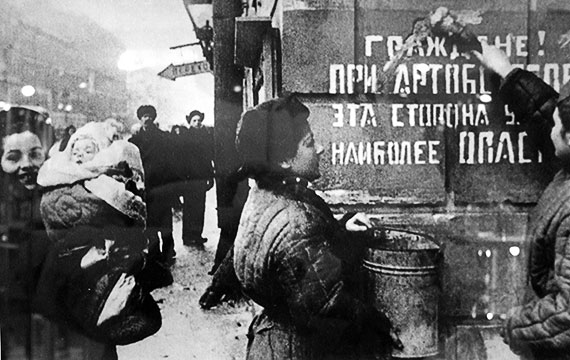
For almost 900 days--from Sept. 8, 1941 to Jan. 27, 1944--the city of Leningrad (known today as St. Petersburg) was blockaded by the Germans and Finns under the command of Field Marshal Wilhelm von Leeb, as part of Operation Barbarossa. The city is so important to Hitler for it was once the capital of Russia before it was moved to Moscow. Furthermore, the city also houses the Baltic Fleet, a heavy tank factory, and some of its most important treasures; and to top it all off, it was the spiritual capital of the Soviet Union, being the cradle of the Russian Revolution. The Third Reich also prioritized this city bearing the name of Vladimir Lenin, the great leader of the Soviets, along with Moscow (the capital) and Stalingrad (the city named after Joseph Stalin, its most influential leader; also functioned as its industrial center; now named Volgagrad).

In this span of time, the defenders and the citizens of Leningrad experienced an ordeal not yet repeated in recent history: about four million of its citizens and defenders were killed, wounded, captured, or got sick after the siege was lifted; food became scarce and its quality degraded; bombardments and barrages became common; sickness and hunger reduced the population; their physical and mental health also deteriorated. In short, Leningrad was the most destructive siege of the war and in history in terms of casualties and economical downfall, with Stalingrad still being the bloodiest battle and turning point of the Great Patriotic War.

But what kept the city alive is the courage to live for their city, even if it means neglecting one's self. The children of Leningrad was committed to fight for their mother-city to the last man. They have held off the besieger more than what they could imagine. Death never conquered Leningrad; instead, Leningrad defeated death.

Though the ferocity and peril of the Second World War has long gone, there seems to be an ideological Leningrad in the Philippines, with the forces of death looming its shores.

For years, the Philippines was left untouched by a legal upcoming dedicated on contraception, population control, and reproductive rights...


...until recently.

Carlos Celdran, the infamous tourist guide who unethically desecrated the Holy Mass at the Manila Cathedral almost a year ago, emphasized on national television that the Church, and by that he means the Catholic Church, is involving itself in politics, but in reality, they are just doing their role as society's Mater et Magistra--Mother and Teacher. Besides, it is possible that he perceives mothers as meddlers to their children while ironically protecting their health from complications and, ultimately, childbirth ailments when in doublespeak. Furthermore, he also proclaimed that they are doing this struggle for 16 years.


These are also the sentiments of Celdran's allies, who happened to be supporters of House Bill 4244, commonly known as the Reproductive Health Bill. Most of them also emphasize that the passage of this bill does not mean that it will lead into abortion; yet in study and experience, passing an act on contraception will eventually lead to an act legalizing abortions, divorce, same-sex marriage, and even prostitution at the worst. What's worse about this is that though there are some who admitted that they push for it sooner or later, there are others who are still insisting that through education, abortion will not happen, though they wanted it at the back of their minds. In short: buking na nga, nagtatago pa.

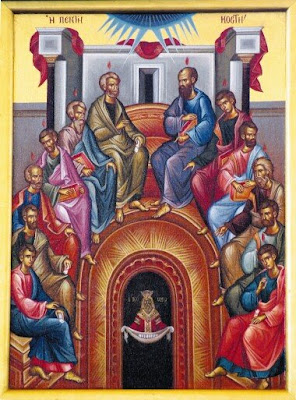

This editorial is timed to the celebration of the Month of the Most Sacred Heart of Jesus and the Immaculate Heart of Mary, and the Month of Matrimony; and specifically, Independence Day, and the Solemnity of  Pentecost last Sunday because the bill on contraception (RH Bill), and the recent looming of a Divorce Bill (which could be compared to Finland in the Siege of Leningrad) are threats to Filipino living as we know it. All laws and proposed laws shape societies, but these bills are doing so all for the wrong reasons. In every angle, the RH and Divorce Bills clearly threaten the Filipino family, our economy, our workforce, even the way we see morality and freedom.

But these groups are but accessories to the real enemies of life and development. Basically, the contraceptive mentality is a foreign concept--an import, to simplify. In short, if these bills will be passed, God forbid, we are opening our doors to aliens and our society will be like the Spanish era--enslaved by foreign minds while retaining our Filipino identity, which is a contradiction to what true nationality is. These bills are given as anti-life, atheistically made, and specifically anti-Catholic; but since we should relate it to our June 12 celebration, we should also emphasize that these legal courses are anti-patriotic; anti-nationalistic; anti-Filipino.


The person responsible for all of this is Margaret Sanger, the founder of the American Birth Control League, the predecessor of Planned Parenthood. Aside from pushing for the legalization of abortion, she also proposes the legalization of birth control methods and promotes negative eugenics, which Adolf Hitler applied during the Third Reich, not just to the Jews, but virtually to everyone who opposes Germany. Now we see the connection of the Siege of Leningrad and to what is called as the "Siege of Filipino Life".

Now let us Filipinize the experience of "The 900 Days". Assuming that the contraceptive mentality and its proponents are struggling for sixteen years, they have long lobbied at the first line of defense. By 2010, they have broke out of the "Luga Line" through the Manila Cathedral incident, and started to isolate the Philippines from the rest of the pro-life world in terms of the contraceptive trend with the compromise of Malta to divorce. Just as Hitler delayed the total destruction of Leningrad in order to kill the populace by hunger, so does the condom-brained people try to make delaying tactics like pushing for a "Divorce Bill" as a red herring to contraception. But it turns out that the Russians have struggled all the more; by creating a "Road of Life" through the frozen Lake Ladoga, the Leningraders were somehow supplied by its basic needs--food, clothing, and fuel. Day in and day out, Pro-lifers based on religion keep on praying, believing in the power of prayer; and those based on secular arguments and facts, keep on researching and studying as much data as they could supply the frontliners.

But still, deaths in Leningrad were of cataclysmic proportions every day of the siege. If "the pill" will be legalized, this may lead to death counts far greater than that of the Japanese Invasion, the Martial Law era, the Pinatubo eruption, and the death tolls of natural disasters combined. Basically, the contraceptive mentality is a death sentence that will bring chaos to society if no one is dedicated to combat it off and force it to our shores once and for all.

After almost 900 days of blockade and misery, Leningrad's siege was lifted. Russia, the very inspiration of this spirit of hope called the Siege of Leningrad, through the Russian Orthodox Church and the Russian government, are taking steps in making abortion illegal and the prohibition of contraceptive use without a physician's prescription. We Filipinos are hoping that this siege brought about by the Culture of Death will be lifted by the Gospel of Life; and that we may destroy the Hitler that is threatening the family.

For now, the Philippines must survive this Leningrad in the making.

Now is the time to play "The Sacred War" in medley with "Bayan Ko".

Tuesday, June 7, 2011

HAPPY ANNIVERSARY!


I wanna greet my good friend and fellow blogger, Kuya Weldann "Sir Bitz" Panganiban, in his fifth year at Blogspot! I wish you all the best.... And rest assured that MSAG will be ONE WITH YOU!

Friday, June 3, 2011

The Single Greatest Obstacle to the Reform [A Commentary]

This got my eyes. Fr. Jojo Zerrudo was interviewed by my fellow Thomasians, and this is what he said in his blog:

Yesterday, some students from the University of Santo Tomas in Manila interviewed me for an article on Universae Ecclesiae [Father, I presume these are guys from The V]. When the conversation tackled the issue of Ad Orientem, I asked the students: To whom does the priest offer the Sacred Liturgy, to God or to the people? Without carefully thinking, the students unanimously answered: "The people!" [AAAAAHHH!!! My eyes!] They were surprised when, using the Ordo Missae, I pointed out to them how the prayers were addressed to the Lord and not to the people [Whether in the TLM or the Novus Ordo, ALL PRAYERS ARE OFFERED TO GOD. Common sense, Tigers... tsk]. No matter how much the Holy See insists on the fact that the Liturgy is always directed Ad Deum, it seems that such is not immediately picked up by the average Catholic. The reason for this? It is the celebration of the Mass versus populum [Kulang sa catechesis. Period]. I agree with Dom Mark Kirby of Vultus Christi when he said that "Mass facing the people is the single greatest obstacle to the Reform" of the Liturgy.
______________________________ 

I was disappointed to these interviewers. Looks like they forgot what they learned from their Theology classes. 

'Nuff said.

Saturday, May 28, 2011

Darker side of me? Not really.

I wanted to try to be as clean and as objective in my arguments while referring to the first person. That's the basic reason why I planned to have another blog called Alter-Ego; which will focus in my everyday activities, lighter approaches to social issues, and maybe some blah.

Anyway, check it out, too....

Wednesday, May 25, 2011

I hope His Holiness will wear this...

Saint

Editorial of The Varsitarian, May 16, 2011.


BLESSED POPE JOHN PAUL II IN UST. Portrait depicts the late Pope’s 1995 visit to Asia’s only Pontifical University, and the fondness and affection of the Filipino people toward him. Illustration by PATRICK C. DE LOS REYES.TENS of thousands of Catholics from all over the world flocked at St. Peter’s Square to witness and rejoice in the beatification of Pope John Paul II last May 1, a showcase of the people’s love and appreciation for the Supreme Pontiff who led the Church for 26 years until his death in 2005. Tens of millions more did the witnessing and rejoicing through the electronic media if not vicariously, at least spiritually. And they weren’t all Catholics. They were people from other denominations and other religions who did not hide the affection and high regard they hold for the new beato.
To the Roman Catholic Church and beyond, the Blessed John Paul II was an example of sheer faith, and love amid strife and the many adversities of life. His successor, Benedict XVI, called him “an immense grace which embraced Rome and the whole world: a grace which was in some way the fruit of my beloved predecessor’s entire life, and especially of his witness in suffering.”
The miracle that qualified the late Pope for beatification was the healing of a similar suffering in Sister Marie Simon-Pierre, a nun who asked for his intercession when Parkinson’s disease was already getting in the way of her duties as a faithful.
The man of humble and tragic beginnings was born Karol Jozef Wojtyla in Wadowice, Poland in 1920. At a young age, he faced many loses with “death hovering over the family”—an infant daughter had died before his birth, his mother Emilia passed away a month before he turned nine years old, and his brother Edmund followed three years later. In the midst of the Nazi occupation in 1941, his father Karol had a heart attack and died, leaving the younger Karol completely orphaned.
“At twenty, I had already lost all the people I loved, and even those I might have loved,” the Pope would say in an interview nearly forty years later.
But the man turned to his faith and the Church, even when he was fully capable of taking on other paths given his intellectual talents and charm. His ordination as priest when he was 26 years old would be the start of his swift and surprising climb up the Church’s hierarchy, becoming one of the youngest cardinals in 1967.
The biggest surprise would come on October 16, 1978, when the Sacred College of Cardinals elected him as the 264th pontiff and the first non-Italian one in more than 400 years—a role that he reportedly accepted “before the cardinals with tears in his eyes.”
Speaking on the balcony overlooking the crowd that patiently waited, the reluctant new Pope said that he received the event “in the spirit of obedience to Our Lord and in the total confidence in his Mother, the most holy Madonna.”
From then on, he would be known as John Paul II and would spend the rest of his life with an even bigger family and more responsibilities. As head of one of the biggest sectors of faith in the world, the Supreme Pontiff embraced his newfound kin by traveling to be with them—making him “one of the most-travelled world leaders in history,” reaching more than a hundred countries and visiting the Philippines twice.
His pilgrimages, however, went beyond the Catholic circle. A peacemaker whose charm and sincerity seeped through negotiations, the Pope had touched the hearts and reestablished links with other religious groups like Judaism and Islam. He also met with many political leaders, appealing for peace and better relations.
He would be known by many names and advocacies, one of which is his love and encouragement for the youth. It was in 1985 when he initiated the first World Youth Day (WYD) and it has been held and anticipated since.
His second and last sojourn to the Philippines was for the 1995 World Youth Day in Manila, with its closing Mass at Luneta considered to be the largest Catholic gathering in history. During this visit, the Pope also visited again the University of Santo Tomas, which was hosting the International Youth Forum, the Catholic youth leaders’ forum of WYD. The Pope’s address before the mammoth crowd at the UST Grandstand put in proper perspective while UST enjoys special papal regard historically: “As a pontifical university, Santo Tomás has a special right to the Pope’s attention,” the Pope said. “In fact, this is the third visit of a Pope to the oldest university in Asia: Pope Paul VI came here in 1970; I came in 1981 and now God gives me the grace of being here again to meet the ‘university world’ of the Philippines.” Blessed John Paul added: “As a former university student and professor myself, I feel a special affinity with you. I wish to encourage you to live the University experience with dedication and commitment, in the pursuit of human and academic excellence, with a great sense of responsibility toward your families and society, toward your future and the future of your country.” Years later, when Philippine bishops and clergy visited him in Rome and reminded him about UST and Filipino Catholics, the Pope said he remembered those days “very well [because of] how warmly you received me during the World Youth Day.”
John Paul II dedicated himself to the service of God and the Church amid his long, hard struggle with Parkinson’s disease and the many controversies that he faced during his pontificate. But much like his fond remembrance of the University, John Paul II’s papacy is still regarded not for its shortfalls but its achievements.
Now, only six years after his passing, he has been beatified, which formally declares him among the elect in heaven and worthy of veneration. Even beyond his earthly life, the well-loved Pope is showing us that little miracles can lie in what we decide “to do with the time that is given us.”

Sinner
On the other side of the spectrum is another—but different—kind of remembrance.
Sen. Ferdinand “Bongbong” Marcos Jr., the only son and namesake of the late president Ferdinand Marcos, has revived the clamor to bury his father’s remains in the Libingan ng mga Bayani—the “hallowed place reserved for heroes,” including former presidents and government dignitaries, Filipino veterans, national artists, and military personnel who died in the line of duty.
The issue, which has been dragging on for decades, has dug up old wounds once again. President Benigno Aquino III, whose father was allegedly killed upon the older Marcos’ orders, may have opened his heart to co-existing with the Marcoses peacefully, but he was not ready to take on this huge decision and tossed it over to Vice President Jejomar Binay to prevent his bias from getting in the way.
The plea would bellow in many sectors, even in Congress, where a resolution was signed by more than 200 congressmen, “urging [Aquino] to allow the burial of Marcos at the Libingan.”
The survey outfit Social Weather Stations found that Filipinos have a “virtually exact split opinion” on the matter after their March 4-7 survey, while the StratPOLLS Inc. saw that 71.6 percent—or seven out of 10—of 250 residents in Metro Manila favor the controversial burial.
Marcos’ remains are in a refrigerated crypt in an “ill-maintained and dilapidated” mausoleum in Batac, Ilocos Norte. Marcos kin and supporters keep on citing how his mausoleum is unfit for a former president. But it was the megalomania of the Marcos family and supporters that set up the ghastly mausoleum in the first place. As far as the requirements of Christian charity and human respect are concerned, the former strongman had been accorded that when, after dying in Hawaii where he had fled during the Edsa revolution of 1986, his remains were allowed to be brought home. Many countries that have kicked out dictators haven’t allowed their remains to be brought home.
A Catholic country, the Philippines has rewritten the rules on ousted despots and presidents in the interest of charity. But the Marcos family and their minions still insist on burying him at the Libingan because his mausoleum is “dilapidated” and apparently cannot be properly maintained by the billions he had plundered. Apparently the snootiness of his family and followers cannot be backstopped by the billions they had pillaged: since they cannot put their money where their mouth is, they want the people to foot the bill for their superciliousness. Despite the mercy accorded the strongman, his family, and cohorts by the people who allowed them to come home in the first place, they still want to push the envelope; they’re merciless and irredeemable.
It’s an insult to the Edsa revolution and the tens of thousands of human rights abuses under Marcos, as well as those who have worked for the restoration and the nurturance of our democracy that the Marcoses and their sycophants could demand state burial for the ousted despot. It’s an insult to the many men and women—journalists, politicians, and civilians alike—whose rights and lives were put to disdain by the stronghold of the dictator, his thugs, and his kleptocrats.
That the Marcos kin and minions have had the gall to demand a state burial for the strongman—and the fact that the public at large seems willing to go along with them—should indicate that the battle for historical memory is slipping. More and more, Filipinos feel a little kinder toward Marcos not really because his successors haven’t been any better (although that’s part of the reason), but because Filipinos continue to be infected by short memory and shallow thinking: they can’t seem to understand that many of the ills affecting the nation now owes to martial law and Marcos’ scornful decision in 1972 to destroy the rules of the democratic game so as to perpetuate himself in power by corrupting the military and the body politic. The Filipino people should not disgrace themselves further: they should say No to burying Marcos at the Libingan and say Yes to charity with, above all, truth and justice.

Tuesday, May 24, 2011

Prophecy or Mass Panic?

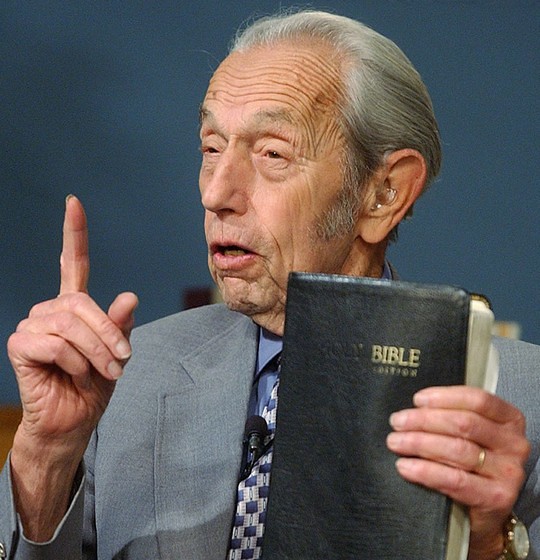
Does anyone know this old dude?


Or I guess you have seen these ads before May 21...


Well, how can you convince a largely Catholic country who believes that "NO ONE KNOWS THE HOUR..." (Mt. 24:36) with a "prophecy" of doom that a man named Harold Camping "calculated" in the late 1980's? His so-called "Judgment Day" was first predicted on Sept.7, 1994 (the Vigil(?) of the Birth of the Blessed Virgin Mary), which failed. When it did, Camping explained that there was a "grace period" that will last until May 21, 2011, where each local timezone will experience earthquakes at dusk and souls will be raptured (Rapture is an Evangelical Protestant concept of the election of the faithful, or in simplespeak, souls of "those who are faithful to Christ" will be snatched from the earth and will partake in the Heavenly Banquet. I call it an unfair, overrated stupidity).

But except for a 4-point-something magnitude quake in Northern Luzon that night (which was about an hour late to the predicted "worldwide timezone earthquake"), NOTHING HAPPENED. May 22 came (which is actually my Mom's birthday), and everyone's screwing and cursing Camping personally and virtually. Now he's telling a new date: October 21, 2011. He says that that will be it. I say: even if December 21, 2012 will come, NOTHING WILL HAPPEN; and if there will be a December 22 (which will apparently happen), I'm going to party at my birthday!

He failed once.

He failed twice.

And with this new prediction, he will absolutely fail again.

Will you let him spread his lies and create mass panic? I won't.

Jesus Christ was consistent: NO ONE KNOWS THE HOUR...EXCEPT GOD THE FATHER (Mt. 24:36).


Oh yeah...I almost forgot.... I call this "The Biggest Joke and the Epic Fail of the Century". LOL

Another P.S.: Why emphasize God as Justice? Isn't He Mercy as well? Just because of one man predicting the end of the world, it doesn't follow that God will do it. Besides, Camping had too much adulterated Protestant garbage on his sleeve.

Followers

Heads' Up!